
Commerce Township Previous Residents by Era
A single Commerce address deserves an era-aware trail. Today's parcel identifies the place. Recorded instruments establish each transfer event. Address-first directories capture snapshots of historical household heads, and census, obituary, and probate material rounds out the family context. The source table spells out what each path can genuinely show. A gap between sources proves nothing by itself, so don't read a missing entry as an empty house or a family that moved away.
| Commerce source | Known span | Where to use it | Address-history clue |
|---|---|---|---|
| Super Index / Tract Index | Computer index from Jan. 1, 1964; physical deeds into the 1800s | Oakland Register of Deeds online and at the counter | Recorded parties, dates, legal descriptions, and price when indexed |
| Commerce BS&A permits and tax | Current collection; historical cutoff not located | Township online route and offices | Current parcel clues and dated work evidence |
| North Oakland criss-cross | 1957, 1958, and 1960 | OCPHS in Pontiac | Street and house number to household-head and phone clue |
| Bresser cross-index | 1967–68 | OCPHS in Pontiac | Address, household head, phone, and movement clues |
| Federal census | Released schedules through 1950 | NARA, FamilySearch, or library access | Household snapshot at the census date |
| OCPHS obituary and vital material | Collection-specific historic runs | OCPHS genealogy resources | Death, family, and end-of-trail clues |
Match the starting point to the era of the question. For a specific Commerce house today, begin with the current parcel. For a mid-century household, open an address-first directory first. For a pre-1964 transfer, plan on moving from the web index to the Oakland counter. A mail-copy request works too.
Start Commerce Township Previous Residents
Gather three identifiers before tracing anyone. You want the Commerce situs address, the ten-digit Oakland County PIN, and the legal description. The PIN is the county's unique parcel identifier. The situs is where the parcel actually sits. A tax mailing address can be somewhere else entirely. Never silently swap it for the home location. This matters in Commerce, where a local address may carry a Walled Lake or Wixom postal label.
The Oakland Property Gateway searches by PIN or property address. It accepts partial and wildcard address entries. It also lets you click parcels on the map. Commerce BS&A adds the township property, tax, and permit route. When a former address fails, hold onto the PIN, the CVT, the lot and block description, the old street spelling, and the document number. Avoid forcing a match on postal text.
- Grantor / grantee
- The grantor transfers an interest in an instrument; the grantee receives it.
- Chain of title
- The linked sequence of recorded transfers for the same parcel or legal description.
- Legal description
- The land description in a recorded instrument, often lot/block or metes-and-bounds language, which can survive an address change.
- Enumeration district
- The geographic unit census takers used, helpful when pairing a released schedule with an address area.
Trace Commerce Township Previous Owners
Separate ownership from household listings in any Commerce previous residents search. Open with the current parcel information. Then treat the current owner as grantee. Or find the most recent deed by document number. The seller named on that instrument becomes the earlier name. Test it as a grantee in turn. At each step, compare the legal description or PIN. Check the recording date and the document type. Note any subdivision or lot-and-block language too. Parcel splits and combinations can quietly break an address-only chain.
- Capture the current Commerce owner spelling, PIN, situs, and legal description from Property Gateway or the township route.
- Search the current party, address-derived PIN, legal description, or document number in the Oakland Super Index.
- Read the transfer parties and use the seller as a possible earlier grantee, preserving the document date and parcel description.
- Repeat backward only where the PIN or legal description still fits. Check plats and former parcel identifiers when a tract was divided or combined.
- For pre-1964 work, ask the Register of Deeds how to search paper records by owner, legal description, or Liber/Page and obtain copies at the counter or by mail.
The free index is a placement tool and nothing more. Images, details, and downloads inside the portal are paid. A public index result is not a certified copy, so keep the copy-request path with each document in your Commerce chronology.
Commerce Township Deeds Before 1964
The January 1, 1964 computer-index boundary is a useful number for Commerce history. It is not a boundary for the deed collection itself. Physical records reach into the 1800s according to the Oakland Tract Index. So a stop in online results is really a signal to change access channels. It is not the end of the trail. Bring the legal description, the old owner, the PIN when you have it, the recording date, the Liber and page, or the document number to the county office. Oakland's Super Index is the current online entry point. It covers the modern portion of the chain.
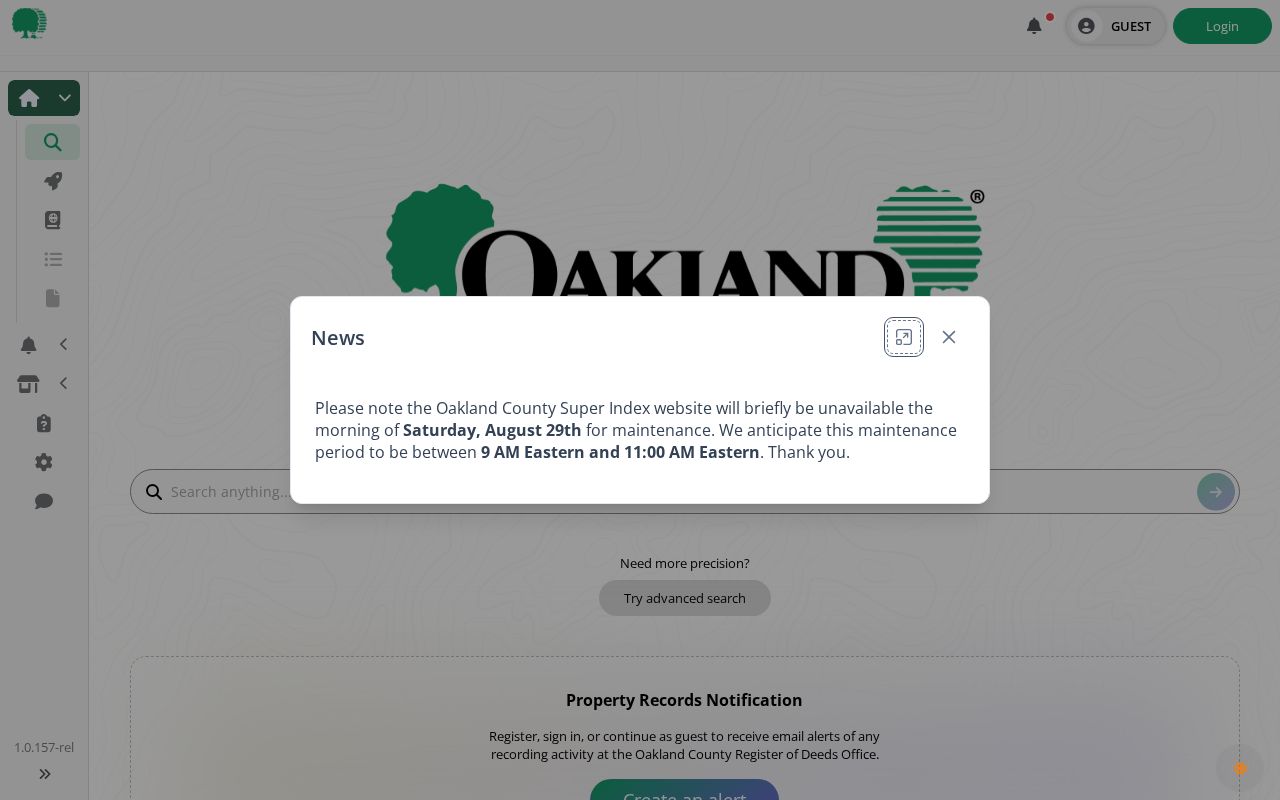
The free search path shows index entries only. Document access and downloads remain paid. Older paper records call for the Register of Deeds' counter or the mail procedure.
Call ahead before visiting for an older book search. The Register of Deeds offers in-person and mail copies, with no fax-copy route. Name-only searches can mislead when similar names crowd the index. The parcel description remains the best bridge.
Commerce Township Previous Residents in Directories
Ownership documents rarely say who actually lived at an address. OCPHS holds the North Oakland criss-cross volumes for 1957, 1958, and 1960. It also holds Bresser's 1967–68 South Oakland cross-index. Those address-first volumes can place a household head at a street number. Some editions add a phone, an owner marker, or a first-listed cue. Others include relocation information depending on the edition. Record exactly what the edition prints. Then test it against a deed or another dated source.
The historical shelf also includes the 1942/43 Pontiac-Bloomfield-Hills-Commerce directory and the 1944 Pontiac-Commerce telephone directory. Both titles name Commerce directly. Still, a telephone exchange alone is not proof of township residence. The Commerce Township city directory covers the historical collections and their formats in more detail.
For the local route, Commerce Township Community Library research services provide access to MeL. Cardholders get remote databases. Visitors also find public computers, scanning, and research support.
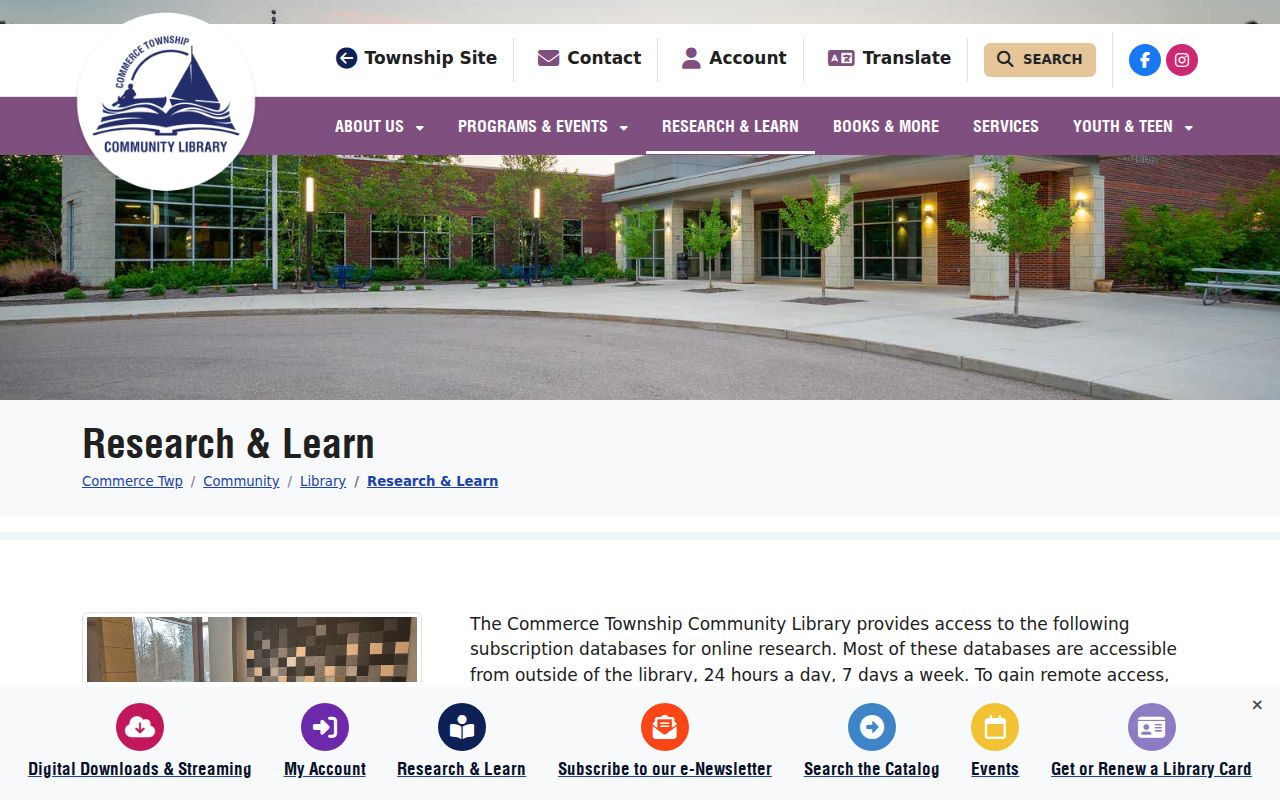
The library publishes no verified Commerce house-history guide and no dedicated local directory shelf. So ask the staff directly which current databases or materials can be used for the specific road or family.
Commerce Township Previous Resident Census
Pair a directory year with the nearest released census year. But never treat the two as the same kind of record. A directory captures an address or phone clue at publication time. A census captures a household on its census date. Take the street and house number from the criss-cross or Bresser entry. Note the household head and spelling, then locate the right enumeration district. Compare the household composition against the directory's date. The two records together tell you far more about who lived in a Commerce house than either one alone.
- Write down the exact Commerce address text, volume year, household head, and phone or movement clue if shown.
- Check the closest released federal census schedule and retain its census date rather than assuming an annual address match.
- Compare street spelling, nearby households, age and relationship patterns, and the parcel or deed trail.
- Use an obituary, cemetery record, or probate file to explain a later transfer or departure where two independent sources support it.
Note: A mismatch between a directory entry and a census entry can reflect publication timing, rural-route naming, coverage gaps, or an index omission. Compare both records before trusting either.
Commerce Township Previous Resident Maps
Permits put dates on a Commerce property's past. A permit file can date construction, an alteration, an addition, or a demolition at one address. Record the permit number, the issue date, the parcel, and the work description where public. Then corroborate that clue with a deed, a directory, a census page, or an obituary. Never make a contractor into an owner. Ownership rests on a separate title record. Commerce Township has no Sanborn map run. Oakland history sources list township maps from 1857, 1872, 1896, 1908, 1930, 1947, 1960, 1964, 1966, 1970, 1973, 1975, 1977, 1979, and 1990. Treat those as county map context. They are not Sanborn sheets. When a permit or map lead runs dry, ask the Building Department, the Commerce Clerk, CTCL, or OCPHS about the correct holding.
Commerce Township Previous Resident Endpoints
Every address trail eventually goes cold. When a former owner or household head vanishes from the Commerce Township records, obituaries, cemetery records, marriage records, and probate cases give the trail a dated endpoint. OCPHS holds obituary card files and scrapbooks. The same society keeps cemetery, vital, census, deed, directory, map, and newspaper material useful for tracing past residents of the area. The Oakland Probate Court offers a name search covering current and historical case information. Files themselves are requested through the court. There is no online document collection. A docket can name heirs or a final transfer. Check it against the deed chain anyway. For an older vital or obituary clue, keep the source name, the date, and the copy or file-request path. The strongest conclusion about Commerce past residents joins two independent source families, like a directory plus a deed, or an obituary plus a probate docket and transfer instrument.
Commerce Township Previous Residents at Byers Park
Byers Park shows why old maps matter. The Abraham Walrod and Peck property research traces an 1825 patent, later ownership, a 1934 family purchase, and preservation after a proposed I-275 route was shifted roughly 310 feet east. The site became Commerce Township's first State Historic Site in 1974. That is local record history. It proves nothing about any other parcel. A house near an old road, park, lake, or subdivision edge deserves extra care. Compare the modern parcel geometry with the plat, the legal description, and a dated map. Road corridors and postal labels shift. The document trail identifying the parcel often does not.
Commerce Township Previous Resident Limits
Past-resident research is not a roster. A recorded owner may have gotten tax mail elsewhere. A directory may name one head only. A census is a dated snapshot, and an obituary can tie a person to a family without proving a continuous address. Commerce postal overlaps, parcel changes, protected voter rolls, and private account data make source labels essential.
Lawful use. Commerce house and family history research must remain personal and lawful. Never use address, obituary, deed, or court information to follow, threaten, harass, or otherwise harm a living person.
Michigan's Address Confidentiality Program gives qualifying participants a designated address and mail forwarding. A substitute address is not a real clue. Never use a historical record or public index to infer a protected current residence. For corrections or redaction, contact the record's custodian.